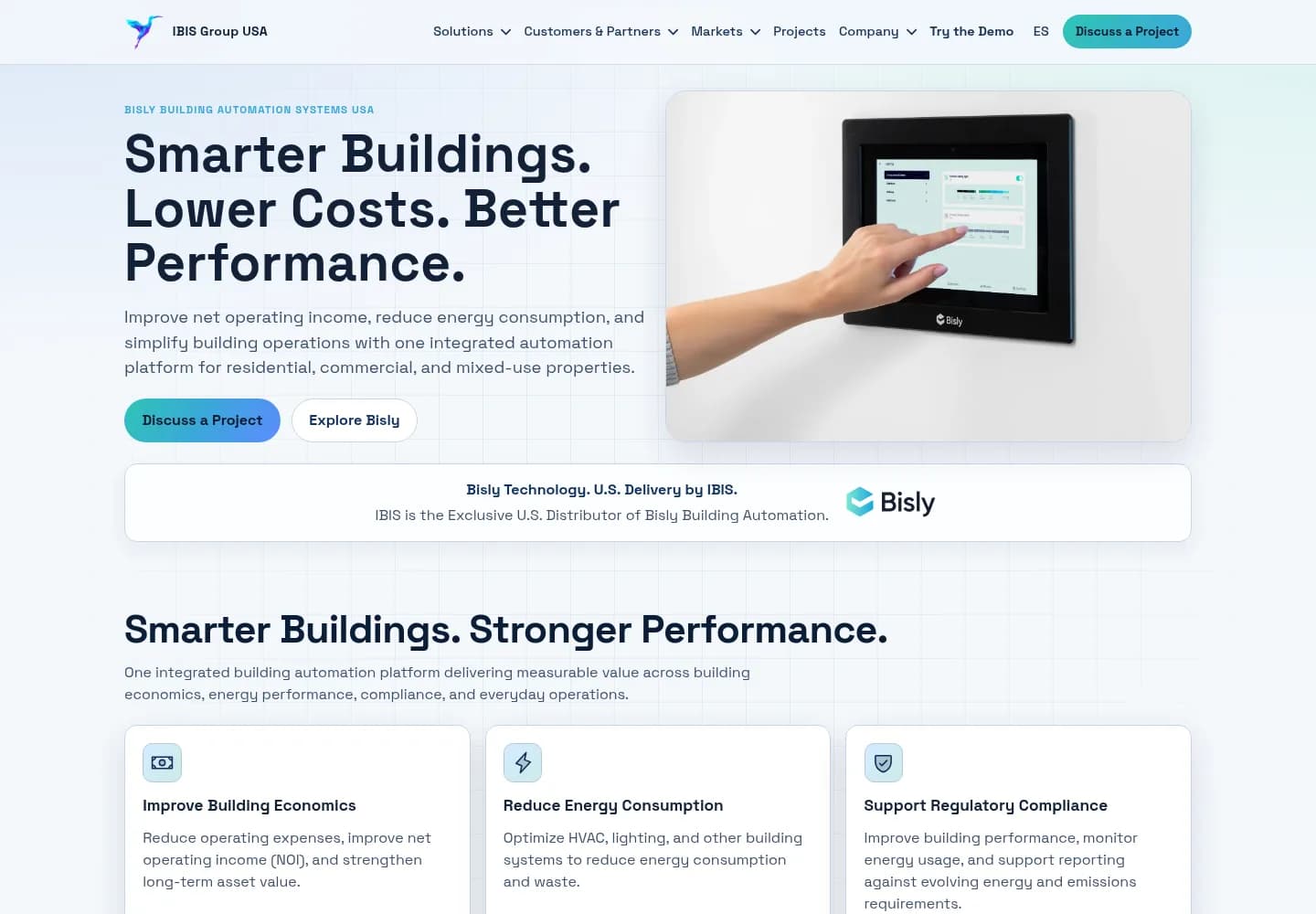
From go-to-market strategy and custom website development to marketing automation, CRM, ERP, B2B commerce, and partner operations.
One commercial direction, expressed through the public website and supporting digital work.
01 / The business challenge
A national market. Many different conversations.
IBIS Group USA is the exclusive U.S. distributor of Bisly, a European building-automation platform. Introducing that technology requires more than explaining what the products do. Owners, developers, technical specifiers, and delivery partners each need a different reason to engage.
Regions, building types, sales processes, and partner pricing all shape the business. Orchard 9 organized the digital work around this commercial model: a shared direction for the website, campaigns, and developing operational platform.
The whole picture
The business model connects the work.
The website explains the opportunity. Campaigns bring the right people to relevant content. Sales and operations carry the relationship forward. Each part has a distinct responsibility within the same business architecture.
One commercial direction. Five connected responsibilities.
01
Market strategy
Regions, audiences, building types, and partner development.
02
Website & campaigns
Relevant destinations and messages for each audience.
03
Lead generation
An inquiry or partner conversation with a clear next step.
04
CRM & sales
The operational brief: qualify opportunities and manage follow-up.
05
Business operations
The operational brief: ERP, commerce, and partner workflows.
Conceptual business journey. Arrows show sequence and shared purpose, not automated data connections. Website-to-CRM and campaign-to-Odoo integrations have not been verified. Odoo rollout status is detailed below.
02 / Go-to-market architecture
Start with the market. Build around the audience.
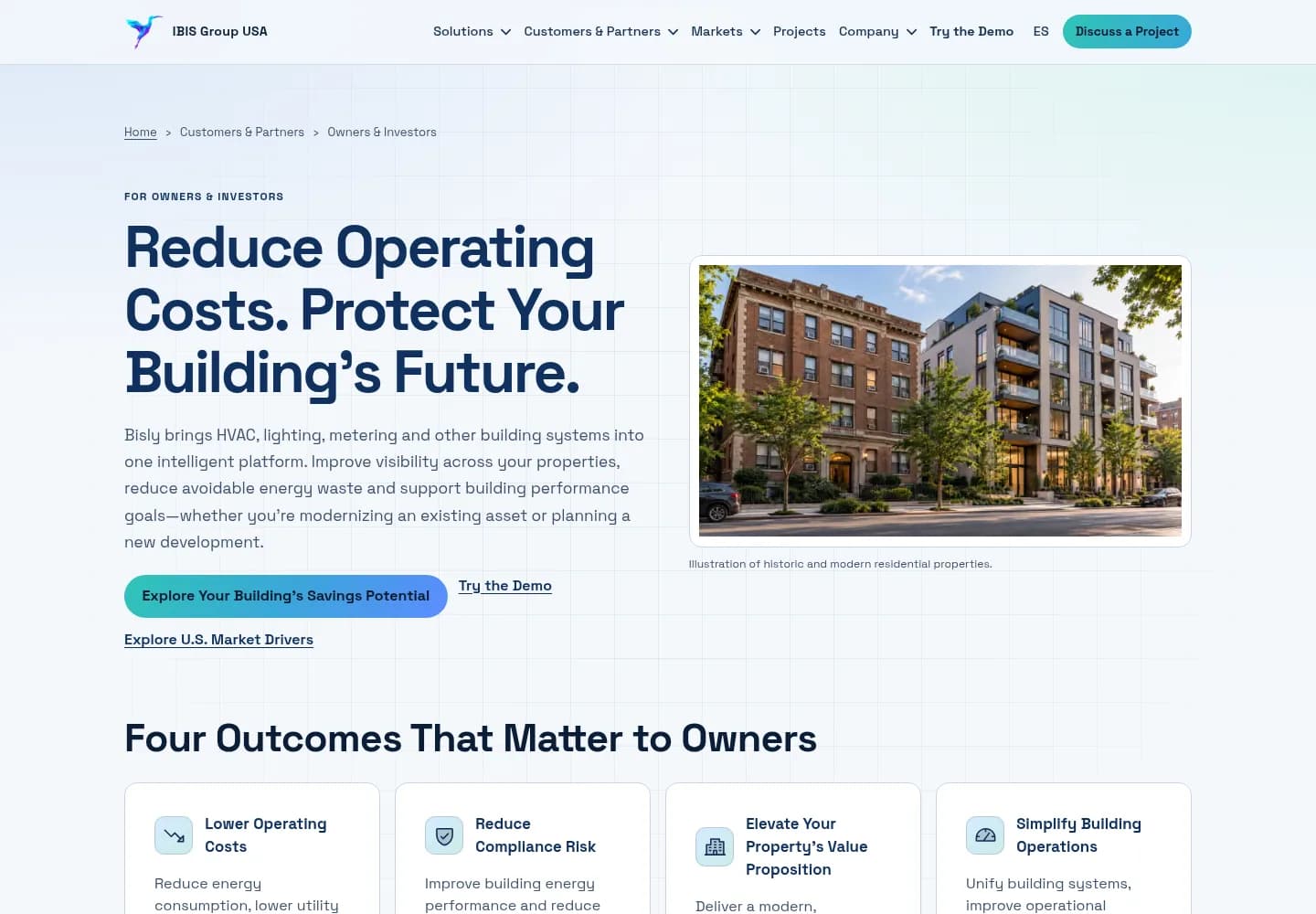
A building owner considers operating economics. An engineer needs technical clarity. An integrator needs to understand delivery and partnership. Segmentation shapes the information architecture, educational content, campaign destinations, and requirements for commercial follow-up.
The same technology. Different reasons to engage.
Where
U.S. regions and local market opportunities
Who
Owners, developers, architects, engineers, contractors, and integrators
What
Residential and commercial buildings
When
New construction and retrofit projects
Relationship
Customer acquisition and delivery-partner development
Find a relevant market or audience page
Understand the application
Start a customer or partner conversation
03 / Custom website & content
A marketing platform with room to grow.
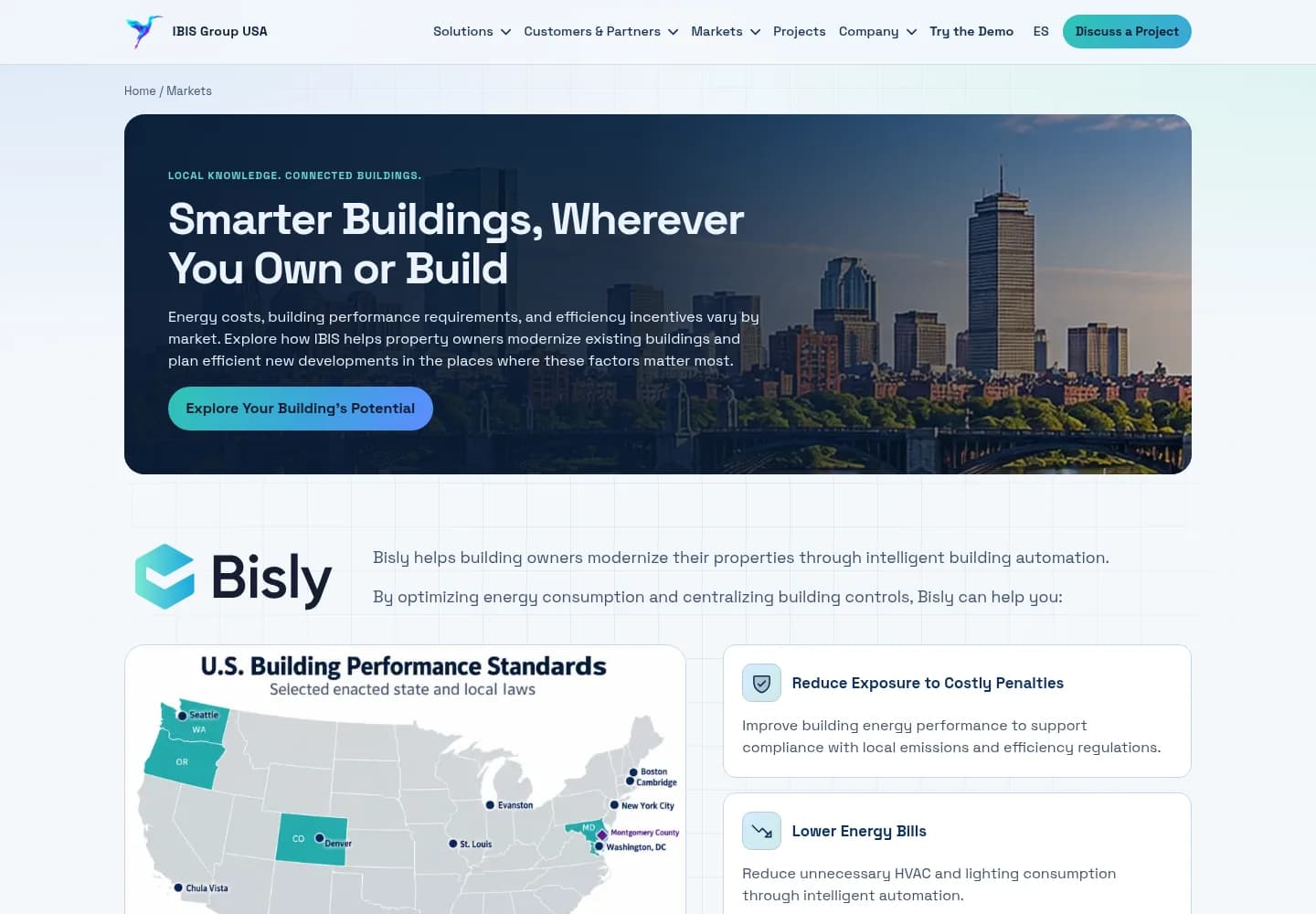
Custom design and a responsive frontend bring a complex offer into a clear, reusable content system. Regional market pages, audience pages, and solution content give visitors a relevant starting point.
English and Spanish content support a broader audience. Educational articles and technical explanations connect to inquiry paths, while audience-specific pages serve as destinations for targeted campaigns.
Structured content, descriptive URLs, metadata, and internal links support search and AI-assisted discovery. These are publishing foundations, without a promise of rankings or traffic.
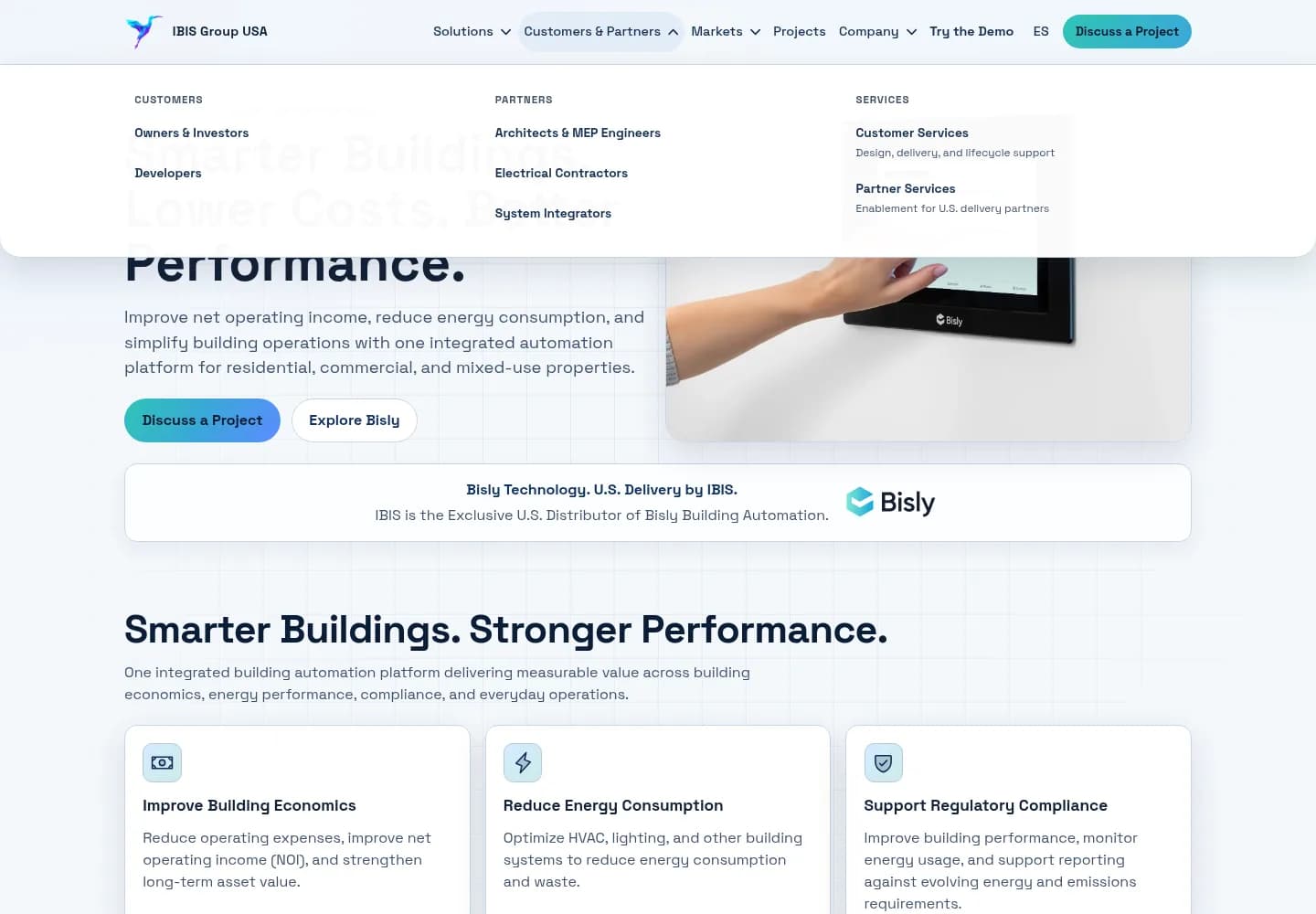
Homepage: a clear introduction to the technology and its business value.Mega menu: different routes for customers and delivery partners.Markets: regional context within one national commercial strategy.Audience content: the same platform explained through a buyer’s priorities.
04 / Customized marketing automation
Proven software. Purpose-built campaign control.
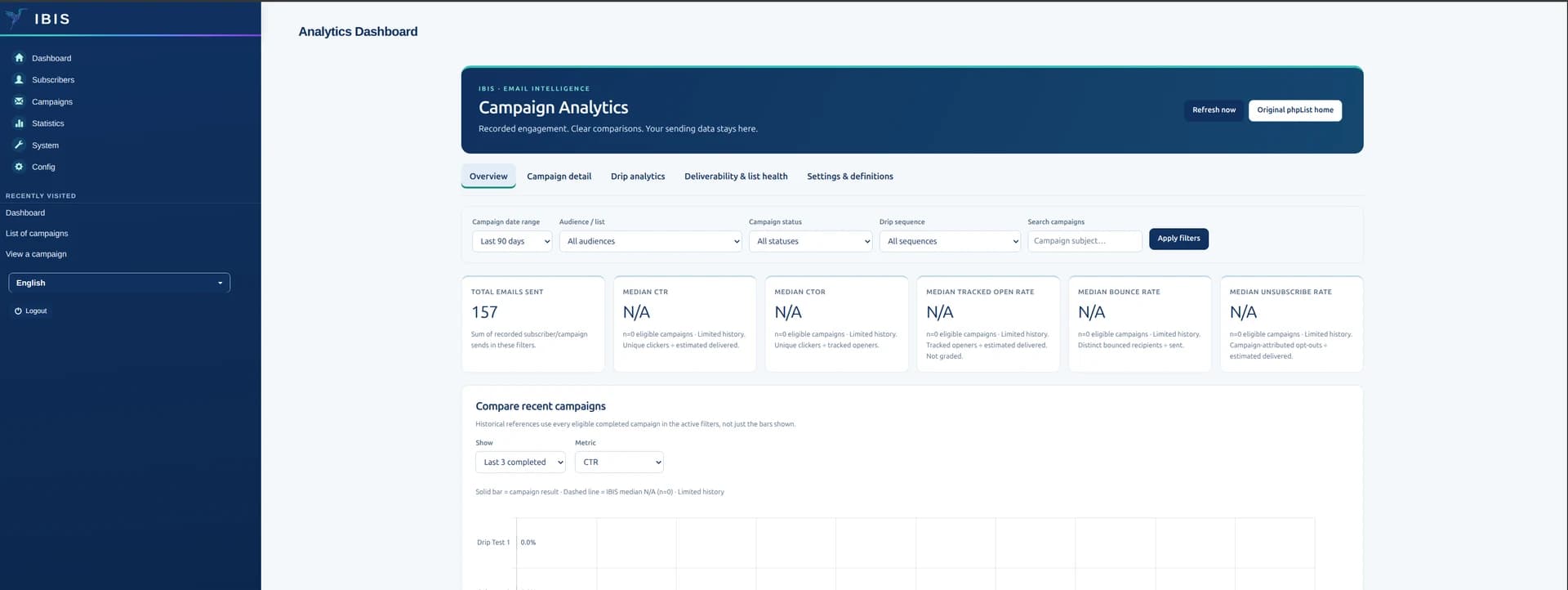
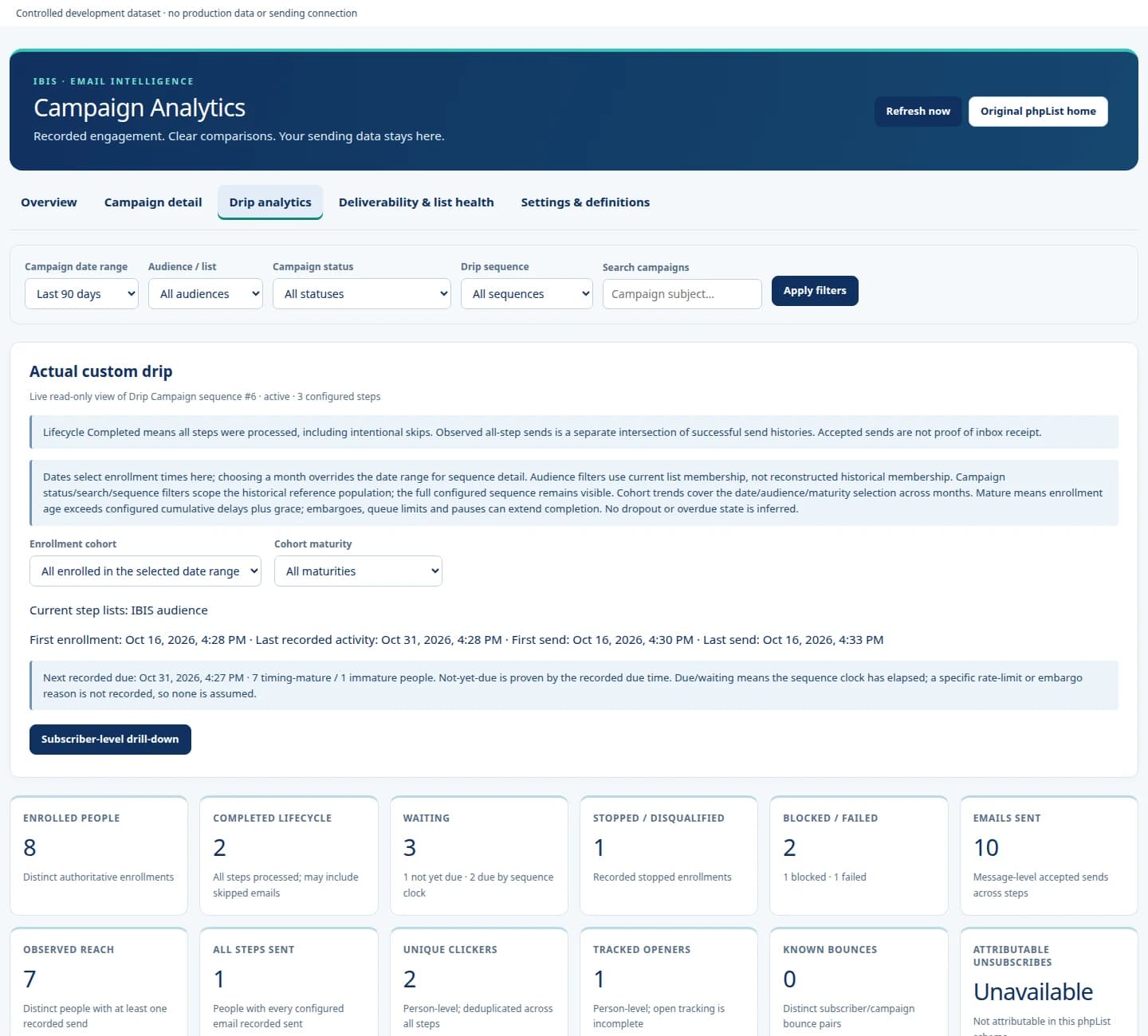
Orchard 9 extended established open-source software rather than rebuilding an email platform. phpList supplies the foundation; focused customization adds a clearer interface, drip campaigns, audience segmentation, scheduling, sending controls, and operational monitoring.
Different messages can direct owners, engineers, or delivery partners to the website content written for them. The connection is a relevant destination and a coordinated campaign, without implying an automatic transfer into Odoo.
AI-assisted development supported implementation, with human review and testing. It does not mean the application makes AI decisions. An extensible foundation also supports infrastructure choices appropriate to the workload and budget.
Actual customized dashboard. Visible figures illustrate the captured interface, not claimed business results.
Implemented sequence and scheduling controls shown with a controlled development dataset. No customer campaign results are represented.05 / The Odoo business platform
An operational home for the commercial model.
Odoo is the platform in the operational brief: CRM, ERP, B2B commerce, and partner workflows within a configurable business environment. The value lies in adapting established software to the distributor’s processes and commercial relationships.
Custom source reviewed · IBIS rollout unconfirmed
CRM & sales
The commercial model calls for one place to manage prospects, customers, opportunities, and follow-up. Reviewed Odoo extensions add project-specific opportunity fields and partner records to the established CRM foundation.
Partner lead review and approval are implemented in the reviewed source. Approval creates a standard CRM lead, giving partner submissions a defined route into sales work. IBIS-specific deployment has not been verified.
IBIS workspace captured · workflows unconfirmed
ERP & operations
Sales activity needs an operational home: customer and product information, business administration, and the commercial processes that support delivery. Odoo provides a configurable foundation for these related functions.
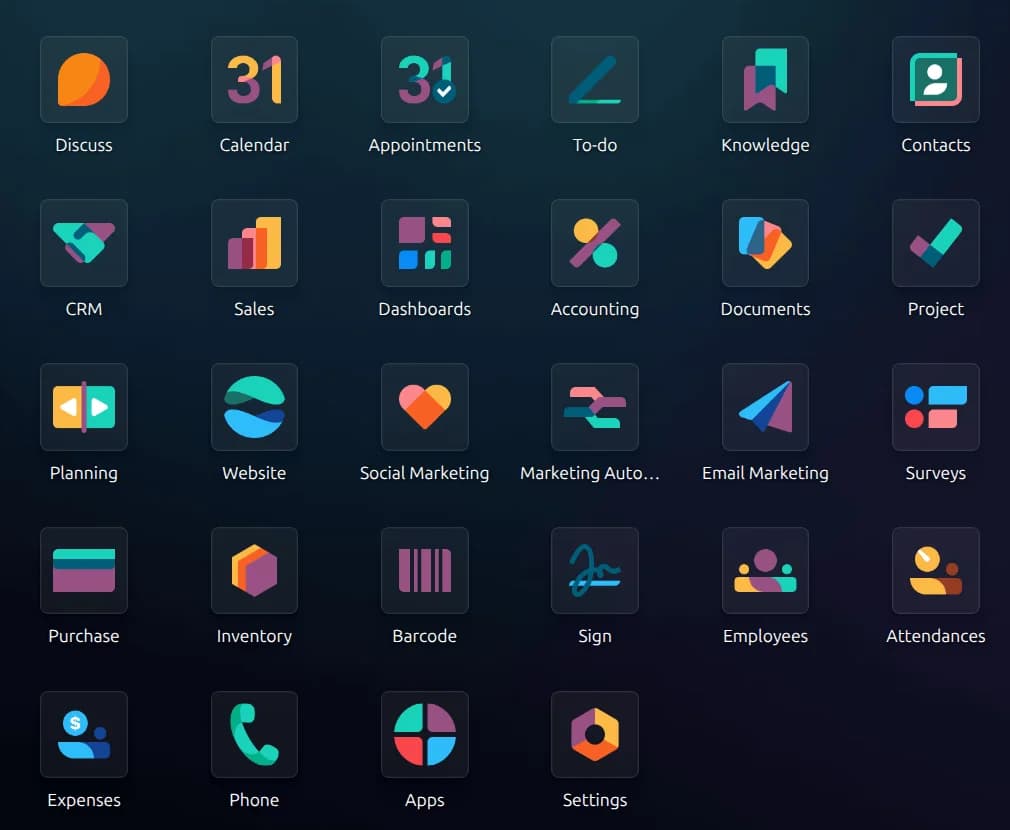
The authentic IBIS workspace shows CRM, Sales, Accounting, Documents, Inventory, and Knowledge applications together. A dedicated IBIS Knowledge Base is also visible. Production workflows, configuration, and the operational use of each application remain to be confirmed.
Commercial requirements · live configuration unverified
B2B commerce & pricing
A distributor needs more than a public product list. The commerce brief covers a product catalog, online ordering, multi-tier partner pricing, price lists, and business-specific commercial rules.
These requirements guide the Odoo commerce configuration. They are not presented here as a verified live storefront or automated pricing integration. Confidential prices and commercial records are excluded.
Lead portal source reviewed · IBIS rollout unconfirmed
Partner access & enablement
The reviewed portal extension implements signed-in lead registration, revisions, comments, internal review, and approval. Access rules restrict submissions by partner company and active program membership.
Company isolation and inactive-member access have dedicated source tests; this showcase does not claim a production security audit. Shared documents and knowledge resources belong to the wider partner-enablement brief and are not verified as delivered portal features.
The IBIS Odoo workspace brings business applications into one environment. Available application icons do not establish which production workflows are configured or in active use.The IBIS Knowledge Base provides a home for business knowledge. This view does not demonstrate partner-facing access. Internal document listings and account controls are excluded from the capture.
06 / What the work demonstrates
Different disciplines. One business initiative.
Strategy, content, software, and operational requirements follow the same commercial direction. The scope and evidence for each part matter as much as the overall picture.
Business strategy
Go-to-market structure, audience segmentation, and a shared commercial direction.
Website & content
Information architecture, UX, custom development, bilingual publishing, and search and AI-discovery foundations.
Campaign architecture
Audience-specific destinations, open-source customization, drip scheduling, and operational reporting.
Targeted development
AI-assisted implementation, human review, and focused extensions of established software.
Operational development
Reviewed Odoo CRM and lead-portal extensions; IBIS configuration, commerce, and rollout status remain unverified.
Ongoing evolution
A structure that can support new regions, content, campaigns, and operational requirements over time.
Built around the need
Technology Designed Around the Business.
IBIS shows how several disciplines can serve a broader business direction. Your starting point may be much smaller: one website, one workflow, or a useful extension to software you already use. The same principles apply—understand the need, choose the right foundation, and make the next improvement practical.